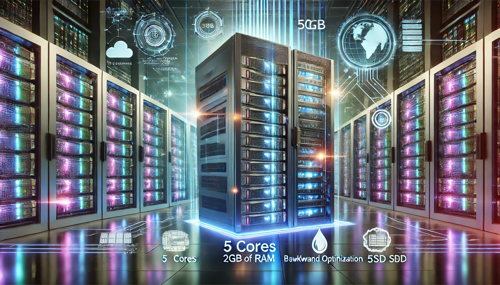
Introduction: In recent years, with the rise in demand for cloud services, content distribution, and low latency, the number of local server data centers in South Korea has fluctuated. This analysis focuses on the dimension of operating costs to evaluate how cost drivers influence the addition or reduction of data centers and layout decisions, providing a reference for decision-makers.
Overall trend in the number of data centers in South Korea
Overall, the number of data centers in South Korea shows a trend of both decentralization and specialization. Large centralized data centers and small edge data centers are developing simultaneously. Their numbers are influenced by both growth in demand and cost pressures, resulting in regional adjustments in their distribution.
The impact of operating costs on data center layout
Operating costs are the key variable in adjusting the number of server rooms. Total Cost of Ownership (TCO) includes costs for electricity, cooling, land, bandwidth, labor, and compliance. Different cost structures drive companies to weigh the options of deploying locally or migrating to an external cloud.
Pressure from rising electricity and cooling costs
Electricity and cooling account for a large proportion of data center operating costs, especially in high-density computing environments. Improving energy efficiency and adopting advanced cooling technologies can reduce the cost per unit, but in the short term, it may discourage the expansion of new local data centers.
The impact of land and rent on site selection
Land prices and commercial lease costs directly influence decisions regarding the location of computer rooms. In high-value areas of Seoul and its surroundings, high rents force operators to relocate or adopt more densely packed centralized designs, affecting the distribution of local data centers.
Trade-off between Localization Services and Compliance Costs
Regarding local data sovereignty and compliance requirements, companies tend to maintain local servers to meet regulations and build customer trust. However, the additional audits and security investments required for compliance also increase operating costs, affecting long-term decisions regarding the number of data centers.
Internet connectivity and bandwidth cost trends
Bandwidth costs and interconnection quality affect user experience and operational costs. To reduce latency and improve service quality, some companies choose to deploy edge data centers in more cities, but rising bandwidth costs can limit large-scale localization.
Considerations of labor and maintenance costs
The labor costs for professional operations and security teams are at a medium to high level in South Korea. Automated operations and remote management can partially replace the need for local manpower, thereby influencing decisions regarding whether to maintain a multi-site data center layout or opt for centralized management.
The impact of cloud migration and edge computing on the number of data centers
Cloud service migration and edge computing develop in parallel: Migrating core operations to hyperscale clouds can reduce the number of on-premises data centers, while edge nodes add small data centers for low-latency scenarios. Together, they shape a mixed landscape of future data center quantities and types.
The impact of economic and policy factors on future trends
Macroeconomics, energy policy, and incentives for renewable energy can change the cost structure of data center operations. The government’s policy adjustments regarding electricity use, land, and taxation may change operators’ decisions regarding investment in and consolidation of local data centers.
Summary and Recommendations
Summary: From the perspective of operating costs, the number of local server data centers in South Korea will exhibit a dynamic balance between centralization and decentralization. It is recommended that enterprises use hybrid deployment and automated operations and maintenance, based on cost-performance analysis, in conjunction with compliance requirements, energy efficiency strategies, and network layout, to optimize total cost of ownership.
- Latest articles
- Website Migration Case Sharing SEO And Speed Changes After Switching Between Hong Kong Vps And Japanese Vps
- The Technical Team’s Experience Discusses The Three Core Indicators For Choosing The Best Vps In Korea
- Performance Tuning And Monitoring Methods Of Vietnam Cn2 Network In High Concurrency Scenarios
- Buy Cloud Servers In Thailand At Low Prices, Compare Manufacturer Discounts And Long-term Operation And Maintenance Costs
- Enterprise Deploys Japanese Native Dynamic IP Address Load Balancing And Failover Solution
- Use Vietnam's Native IP Cloud Server To Build A Private VPN And Corporate Intranet Acceleration Solution
- How To Choose The Appropriate HKEX Computer Room Server Configuration For Financial Business
- Common Misunderstandings Avoidance Guide On The Configuration And Maintenance Of Multiple IPs For US High-Defense Servers
- Beginner's Guide: How To Choose A Cloud Server In Hong Kong? Detailed Explanation Of Bandwidth Selection And Billing Methods
- Huawei Cloud Singapore Server Instance Selection Suggested Specification Comparison Table For Different Business Scenarios
- Popular tags
-
How To Purchase Korean Native Ip And Achieve Exclusive Services
this article will introduce in detail how to purchase korean native ip and achieve exclusive services to help you optimize your network experience. -

Channels And Suggestions For Purchasing Korean Servers
this article details the channels and suggestions for purchasing korean servers to help users choose the right server. -

Suggestions On The Server Rental And Deployment Process Of Korean Kt Station Group With Equal Emphasis On Seo And Security
recommendations on the server rental and deployment process of south korea's kt station group for seo and security needs, including geographical and bandwidth considerations, network isolation, encrypted backup, station group domain name and cache optimization and other practical points.